

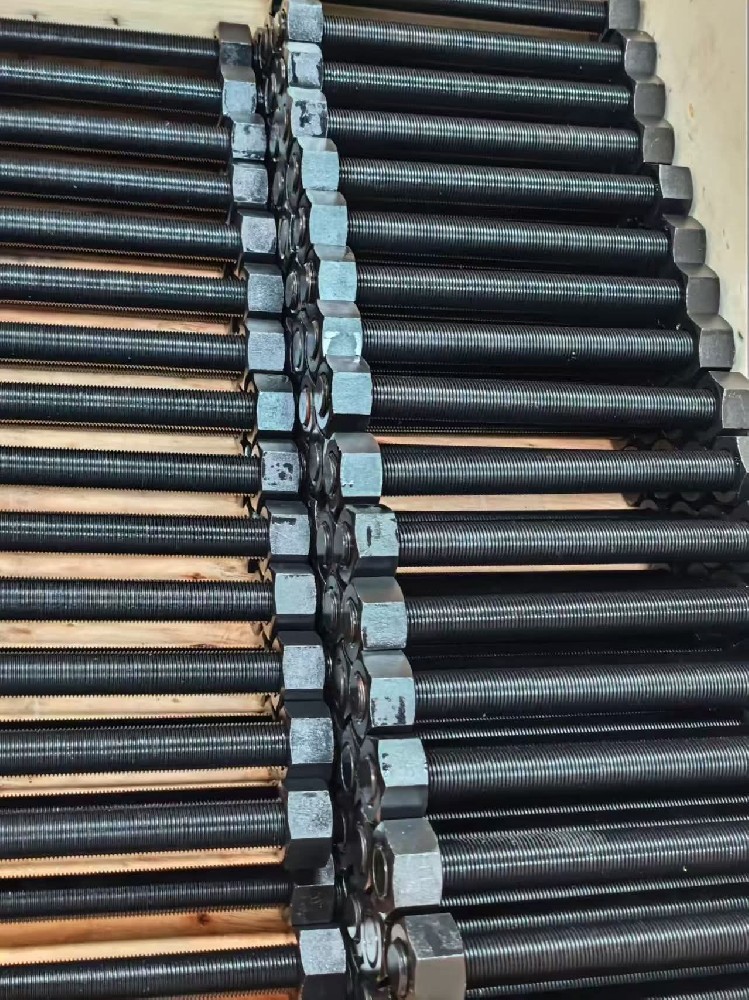
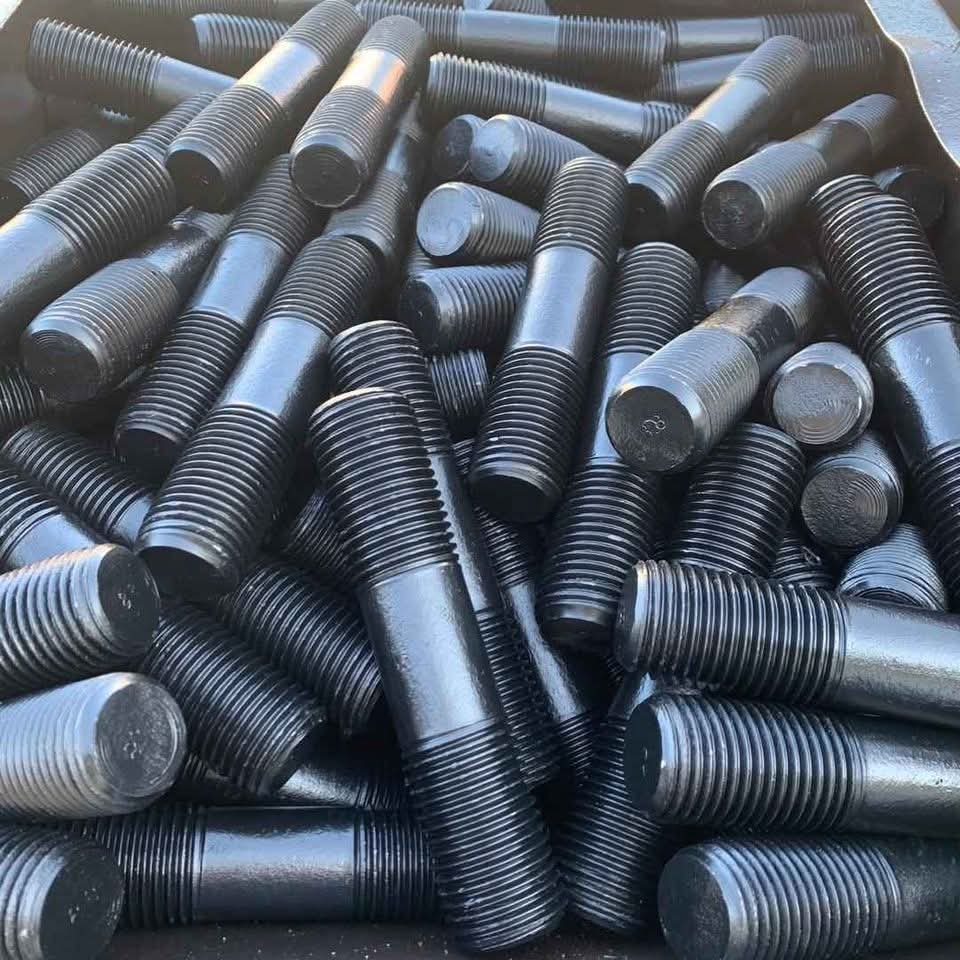
ASTM A193 B7 Stud Bolt 4140 CrMo Steel High Temperature High Pressure Power Plant Refinery Fastener
For bolts and studs manufactured from A193‑B7 and A320‑L7, the main differences lie in service conditions and inspection criteria. Both grades can be produced from 4140 material. A193‑B7 studs are primarily applied for high‑temperature and high‑pressure services, such as power‑plant boilers, steam pipelines, refinery high‑temperature reactors, as well as ambient‑temperature and low‑pressure flanges. By contrast, A320‑L7 bolts and studs are designed for low‑temperature service, and can operate down to ‑101°C without hydrogen‑embrittlement risk. Detailed distinctions are listed below:
1. Basic Standards & Design Orientation
ASTM A193‑B7 Standard: ASTM A193‑B7 for fasteners under high‑temperature and high‑pressure conditions. Design target: boilers, steam piping, high‑temperature pressure vessels. Maximum service temperature: 450°C. Key evaluation items: high‑temperature strength and creep property. No mandatory low‑temperature impact testing is required.
ASTM A320‑L7 Standard: ASTM A320/A320M, specification dedicated for low‑temperature fasteners. Design target: LNG facilities, liquid‑ammonia service, cryogenic storage tanks, air‑separation units, low‑temperature valves. Minimum service temperature: ‑101°C (‑150°F). Key evaluation items: mandatory Charpy V‑Notch low‑temperature impact toughness test.
2. Difference in Heat‑Treatment
The minimum tempering temperature for both grades is 593°C; both shall be quenched and tempered (quenching + high‑temperature tempering). ‑ A193‑B7: Only tensile property and hardness are specified; low‑temperature toughness is not controlled. Products from the same heat are prone to brittle fracture at low temperatures. ‑ A320‑L7: Shall pass the low‑temperature impact test at ‑101°C after quenching & tempering. The heat‑treatment procedure and cooling curve shall be engineered to satisfy low‑temperature toughness requirements.
3. Slight Differences in Chemical Composition (Critical Point)
Although both are based on 4140 Cr‑Mo steel, A320‑L7 imposes stricter limits on detrimental impurities to guarantee low‑temperature toughness. Lower maximum allowable content for Sulphur and Phosphorus. S & P are elements that promote low‑temperature brittleness; stricter restrictions apply for L7. For melting practice, many specifications require fine‑grain electric‑furnace steel with low impurities for L7, while there is no such mandatory requirement for B7. B7 only fulfils high‑‑temperature strength without special control over low‑‑temperature harmful impurities.
4. Comparison of Mechanical Properties (for sizes ≤65 mm)
Room‑temperature tensile and hardness values are nearly identical:
| Item | A193‑B7 | A320‑L7 |
|---|---|---|
| Min. Tensile Strength | 860 MPa | 860 MPa |
| Min. Yield Strength | 725 MPa | 725 MPa |
| Min. Elongation | 16% | 16% |
| Min. Reduction of Area | 50% | 50% |
| Max. Hardness | 321 HB / 35 HRC | 321 HB / 35 HRC |
The decisive difference: low‑temperature impact test
‑ A193‑B7: No mandatory low‑temperature impact test. Per ASME codes, its conventional minimum service temperature is only ‑29°C. It shall not be used below this temperature.
‑ A320‑L7 (mandatory requirement): Test temperature at ‑101°C. Average impact energy for three specimens ≥27 J; minimum value for a single specimen ≥20 J. Failure to meet impact criteria results in direct rejection. This constitutes a mandatory safety threshold for low‑temperature equipment.
5. Applicable Temperature Range (Core for Engineering Selection)
‑ A193‑B7: Recommended service range: ‑29°C ~ +450°C. Below ‑29°C, cold‑brittlement risk exists; codes prohibit its usage for pressure vessels & low‑temperature piping. ‑ A320‑L7: Recommended service range: ‑101°C ~ +450°C, suitable for both high‑ and deep‑low‑temperature conditions. It is the preferred Cr‑Mo alloy stud material for LNG, liquid‑CO₂, liquid‑ammonia and upstream liquid‑nitrogen equipment.
6. Matching Nuts
A193‑B7 bolts/studs shall be used with ASTM A194 Gr.2H nuts. A320‑L7 bolts/studs shall be used with ASTM A194 Gr.7 nuts for low‑temperature service.
Engineering selection rules:For low‑temperature service (<‑29℃): B7 must NOT be substituted for L7. Without verified low‑temperature impact resistance, B7 may suffer instant brittle fracture under load at low temperature, creating severe safety hazards. For ambient‑ or high‑temperature service (≥‑29℃): L7 may be used as a temporary alternative for B7. L7 delivers equivalent strength and high‑temperature performance to B7 with the added benefit of low‑temperature toughness, but at a higher procurement cost.