
No results found. Please try another keyword
Self-cutting screws (officially referred to in national standards as "thread-cutting screws") are a type of tapping screw specifically designed for thick-walled, hard, or brittle materials. They actively cut an internal thread through cutting flutes or edges on the screw tip, rather than f
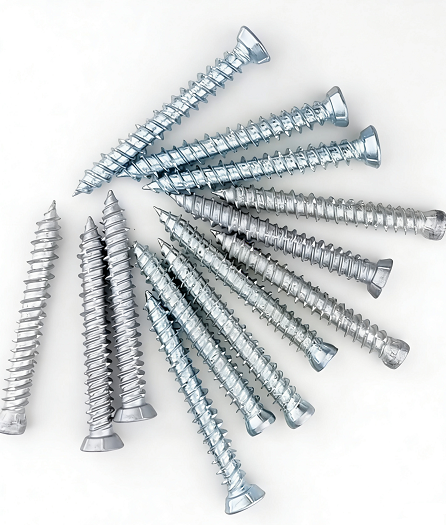
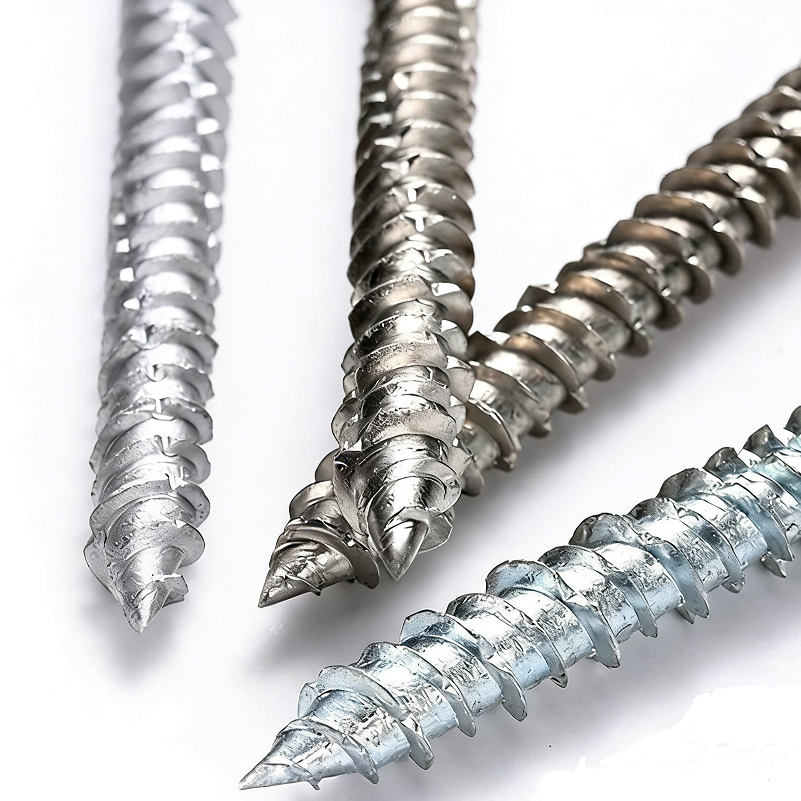
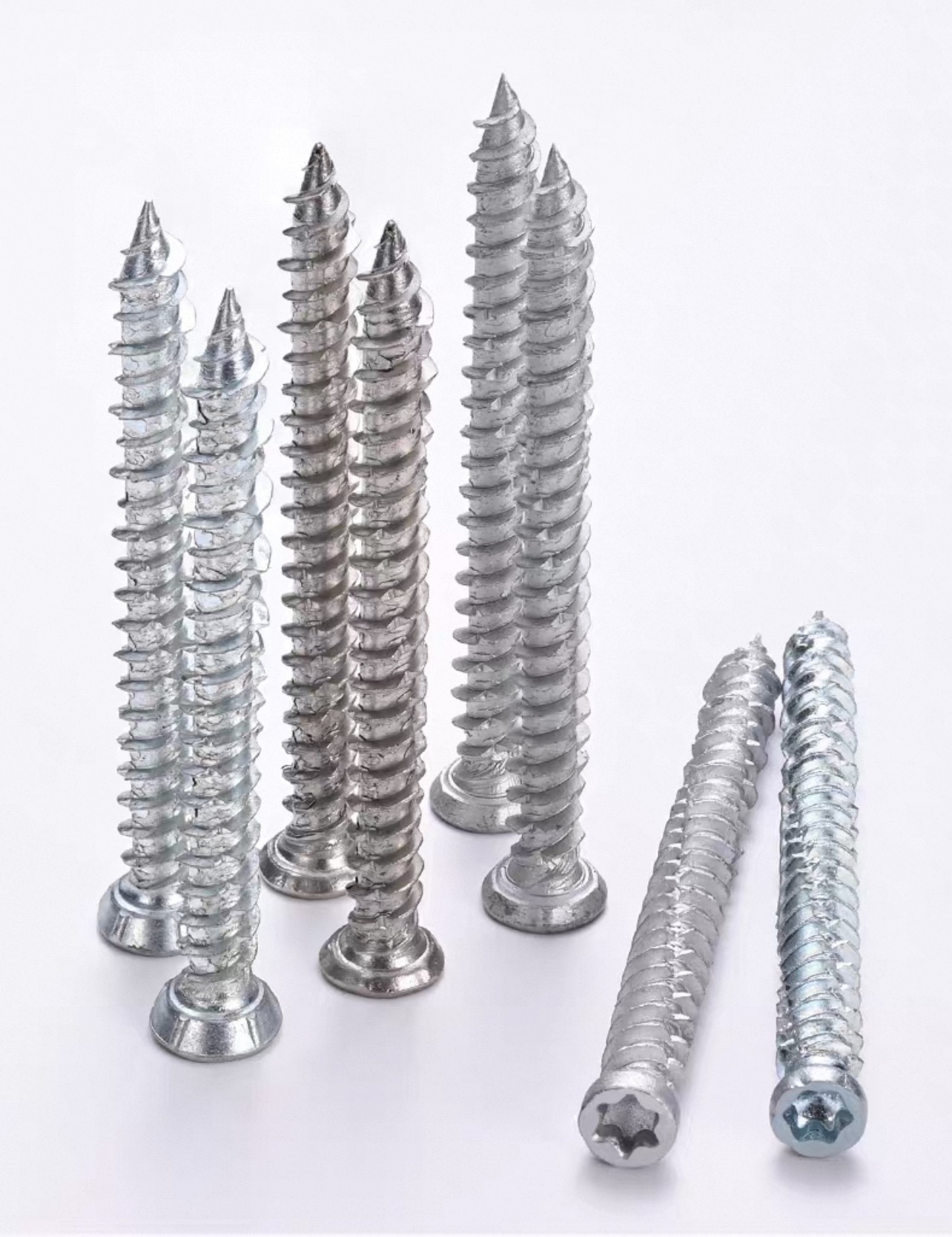
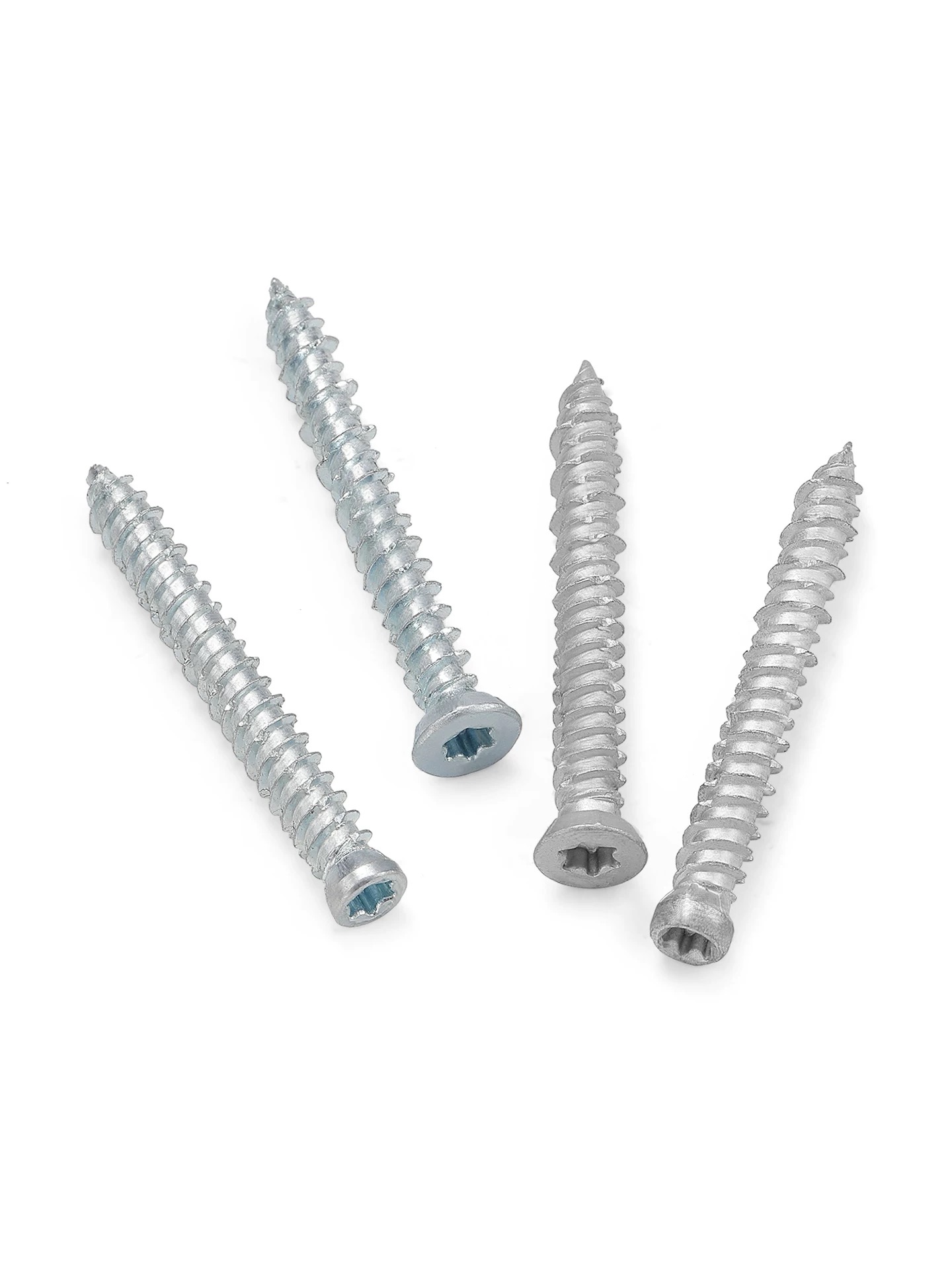
| Item | Specification |
|---|---|
| Product Name | Self‑cutting Frame Screw / Window Frame Screw |
| Drive Type | Torx T30 star recess |
| Head Style | Countersunk flat head; small head / large head optional |
| Material | 8.8 carbon steel; 410 stainless steel optional;etc. |
| Surface Finish | Electro zinc‑plated / Rust‑proof coating |
| Main Diameter | M7.5 (common) |
| Length Range | 40‑142 mm, multiple stock lengths, custom length available |
| Applicable Base | Concrete, brick wall, masonry, solid block |
| Typical Application | Broken‑bridge aluminum door & window fixing, curtain wall accessory installation |
| Packing | Bulk carton / small box, custom packing supported |
Self‑cutting Frame Screw(Window Frame Screw)
Self‑cutting frame screws, also referred to as window frame fixing screws or masonry frame screws, are a specialized high‑performance fastener developed for door‑and‑window construction. Unlike ordinary expansion bolts or wood screws, this screw features a unique self‑cutting thread structure, which can directly cut into concrete, solid brick, block and masonry substrates without pre‑drilling holes or using plastic expansion plugs. It greatly simplifies the installation process of door and window frames and is widely adopted in domestic and overseas door‑window engineering, curtain‑wall auxiliary fixing and building renovation projects.
Optimized self‑cutting thread structureThe special‑shaped thread profile has sharp cutting edges. When driven by electric screwdrivers, it can continuously cut and squeeze the base material to form a matching internal thread inside concrete or brick walls. It achieves tight mechanical bite, brings excellent pull‑out resistance and shear resistance, and keeps long‑term stable fastening performance even under frequent vibration from doors and windows opening and closing.
Torx T30 drive & countersunk flat headAdopts Torx T30 star‑shaped drive. Compared with Phillips cross‑recess, Torx contact area is larger, effectively preventing bit slipping during high‑torque installation and reducing screw head damage. Countersunk flat‑head design allows the whole head to sink smoothly into aluminum‑alloy profile surface after tightening, no protruding part left, which guarantees neat appearance and avoids scratching sealing strips and glass accessories. Both small‑head and large‑head versions are available to fit different profile groove requirements.
High‑strength material and heat‑treatment processStandard version adopts grade 8.8 carbon steel, overall quenched and tempered for high hardness and toughness. It bears high driving torque without screw‑body fracture or thread collapse during penetration into hard masonry. For projects with high anti‑corrosion requirements, 410‑stainless‑steel material is optional, suitable for humid environments and outdoor building exteriors.
Multiple anti‑rust surface options for construction siteDefault electro‑zinc‑plated finish provides reliable anti‑rust performance for general indoor and semi‑outdoor scenarios. For long‑term outdoor exposure, enhanced anti‑rust coating can be supplied to resist rain‑water erosion and atmospheric oxidation, extending service life of fasteners on building facades.
Efficient one‑step installationTraditional door‑window fixing needs drilling hole, putting‑in expansion tube and screwing‑in screw. This self‑cutting frame screw omits expansion plugs. Operators finish fixing in one single screwing‑in step, lowering accessory cost and greatly improving on‑site construction efficiency, especially suitable for large‑volume engineering projects.
Broken‑bridge aluminum door and window engineeringThis is the most mainstream usage scenario, used for fixing aluminum‑alloy door and window frames onto concrete walls and solid brick walls. It ensures firm connection between frame and wall body, effectively avoids frame loosening, shaking and gap deformation caused by long‑term use.
Curtain‑wall and exterior facade auxiliary fixingApplied to fastening facade small brackets, connecting pieces and auxiliary profiles. It is widely used in commercial buildings, office buildings and residential exterior decoration projects.
Building renovation and reconstruction projectsSuitable for old‑house door‑window replacement, wall additional component installation. It adapts to complex on‑site base‑material conditions and reduces complicated hole‑reworking work.
Other masonry‑substrate fastening occasionsFixing metal profiles, light steel accessories and hardware components onto solid concrete and brick‑wall substrates.
⚠️ Application limitation: Not fit for hollow light‑weight walls, hollow blocks and gypsum boards without solid backing substrate. Hollow substrates cannot provide effective bite force, which will cause insufficient holding strength.
Save auxiliary parts: No plastic expansion tube required, reduce procurement and management cost of accessories.
Higher construction efficiency: Simplify working steps, lower labor time cost for large‑scale construction sites.
Stable mechanical property: Thread directly bites into base material, disperses stress evenly, good anti‑vibration performance for door‑window frequent opening‑closing vibration.
Neat installation effect: Countersunk‑head design will not produce raised obstacles on aluminum‑profile surface.
Rich material & surface options: Carbon‑steel for regular projects; stainless‑steel for high‑corrosion‑risk outdoor environments.
‑ M7.5×52mm‑ M7.5×72mm‑ M7.5×92mm‑ M7.5×112mm.etc
Note: Non‑standard dimensions can be produced according to customer drawings or technical requirements.